Skip to Main Content

Glossary of Terms

(terminology commonly used in the Fertiliser Industry)

Acid – Any solution where there are more hydrogen ions present than hydroxide ions, such a solution will have a pH less than 7.

Acid cations – Refers to cations having an acid effect i.e. hydrogen (the most common) and aluminium, ammonium and to a lesser extent some other metal trace elements.

Acid soil – Any soil with a pH less than 7.

Alkaline – A reference to the level of acidity within a chemical environment. When pH greater than 7, the environment is alkaline. When pH less than 7 it is acid.

Bacteria – Microscopic organisms lacking chlorophyll. They obtain their energy from organic matter.

Base cations – Cations with an alkaline rather than acid effect i.e. calcium, magnesium, potassium and sodium.

Biological Activity – A general reference to the living animal and microbial life within the soil.

Biomass – The living organisms found in a particular area i.e. soil biomass.

Buffer – The ability of soil to either resist changes in pH, or changes in the concentration of nutrients in soil solution.

Cation – A positively charged element or ion. This includes base cations as well as aluminium and hydrogen.

Cation Exchange Capacity – The cation exchange capacity of a soil is an indicator of the number of cation exchange sites within the soil.

Cation Exchange Sites – In the soil, many cations are held on these negatively charged surfaces of soil colloids i.e. clay minerals and some decomposed organic matter (e.g. humus).

Clover Nodulation – Small nodules on the roots of clover which are the site of nitrogen fixation by bacteria living in association with the legume.

Decomposition – The process by which dead and decaying plant and animal tissues are broken down, thereby releasing nutrients stored within them.

Drift – A reference to the impact of the wind on the spreading of dry fertiliser products.

Dry matter – Plant or animal material after water has been removed by drying in an oven.

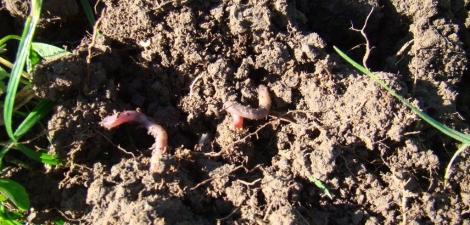
Earthworm – A burrowing animal that lives within the soil.

Enzymes – Protein materials which allow specific biochemical reactions to take place within an organism.

Equilibrium – In a chemical reaction, reactions will proceed in both directions up to a point at which reaction in the forward and reverse directions is the same. This point is known as “equilibrium.”

Fertiliser – Any organic or mineral material that is added to soil to supply essential nutrients.

Humus – A stable form of organic matter that remains when most of the animal and plant residuals have been decomposed by micro-organisms.

Hydrogen – One of the key elements on planet earth. It is abundantly distributed throughout nature, especially as a component of water and in nearly all organic compounds.

Leaching – Removal of soluble substances and nutrients from the upper layers of soil by the downward flow of water.

Legume Nodules – Small growths on the roots of clover which are the site of nitrogen fixation by bacteria living in association with the legume.

Macronutrient – An element essential for plant or animal growth which is utilised in significant quantities.

Micronutrient – An element essential for plant or animal growth which is utilised in smaller quantities. Generally a synonym for the trace elements.

Micro-organism – A small organism such as bacteria that can only be seen using a microscope.

Mycorrhizae – A reference to fungi that co-exist in a structural association with living roots.

Nitrogen Fixers – plants that fix gaseous nitrogen from the air into forms that other plants can use. e.g. Clover.

Nutrient cycling – the process by which nutrients move from the soil to plants, animals and back to the soil again. These nutrients are then used by the plant and thus the cycle continues.

Nutrient Uptake – A reference to the process by which nutrients available in the soil are moved into the plant via its roots.

Organic Matter – Generally refers to the dead or decaying residues of animals and plants in the soil.

Over-liming – Applying lime to a soil in excess of soil requirements.

pH – A numerical measure of acidity and alkalinity. pH 1 is very acidic and pH 14 is very alkaline. The mid point– pH 7- is neutral.

Phosphorus Lock Up – Refers to the differing capacity of soils to convert plant available phosphorus to unavailable or slowly available forms of phosphorus.

Photosynthetic / Photosynthesis – The process by which green plants convert sun energy and carbon dioxide into food (carbohydrates).

Root matting – A layer of roots which forms near the surface of the soil when conditions are not favourable to decomposition.

Soil Fertility – A general descriptive term giving an indication of the quality of a soil.

Soil pH – An estimation of acidity (relative level of hydrogen ions) of the soil solution. The relative levels of base and acid cations present in solution affect the soil pH.

Soil Solution – Free water in the soil in which there is a mixture of nutrient elements; it is from the soil solution that plants and soil organisms derive the majority of their element uptake.

Soil Structure – the arrangement of sand, silt, clay and organic matter particles into units or aggregates.

Suspension – Results when fine particles of largely insoluble material are dispersed through a liquid. The viscosity of the liquid prevents the particles from settling.

Thatching – The build up of a layer of dead and decaying organic material (roots and shoots) above the soil surface.

Toxicity / Toxic – Poisonous.

web site design by Meta Solutionsmeta solutions limited