Skip to Main Content

Fine Lime Boosts Soil Biology and Farm Productivity

In the mindset of many farmers, lime is applied for 2 main reasons: either to raise soil pH in acid soils or to maintain soil pH at desirable levels. Lime also has many other more startling but less well known benefits: in particular, fine lime acts as a stimulant to encourage soil biological activity. The application of small amounts of finely ground lime flour can generate a spectacular pasture response resulting from the increased levels and activity of soil animals such as earthworms, bacteria and fungi.

NZ soils tend to be acidic (low pH). Granular lime (Aglime) has been historically applied to counteract this situation and lift pH to optimum levels of between 5.8 and 6.2. When lime is applied it supplies calcium to the soil. When this occurs, calcium replaces the high levels of hydrogen ions on soil cation exchange sites. When soil pH is within a range of 5.8-6.2, most of the nutrients required by pasture species are at their most readily available.

When very fine lime is used instead of granular lime, there is an immediate lift in soil solution pH. Because of its fine particle size and therefore greater surface area, the calcium supplied by the lime flour is readily available for immediate uptake on soil colloids. For the same reasons, less weight of lime needs to be supplied. If it is spread evenly over the soil (by say a water suspension application) it is immediately available to all the soil surface and doesn’t remain sitting on the surface as large unused lumps. Calcium supplied by the lime flour is released faster than the soil can buffer it, leading to a boost in soil biological activity and an increase in the uptake and availability of many nutrients.

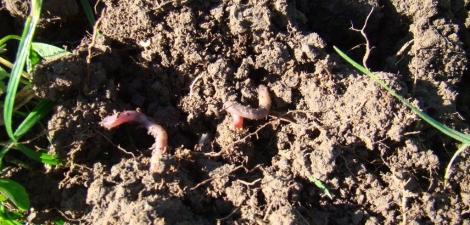
Earthworms are among the most responsive of the soil animals to changes in the calcium level within the soil solution. After the application of readily available calcium supplied by the finely ground lime flour, soil earthworm activity increases resulting in more efficient digestion and breakdown of soil organic matter within the soil. Other soil micro-organisms also respond positively: soil bacteria benefit from the higher soil solution pH as do many soil fungi.

Soil organisms often make the difference between an average soil and a good soil. From a nutrient viewpoint, it has long been realised that to grow good pasture in NZ conditions, the farmer needs to look after the legumes. If the latter are adequately supplied with nutrients, they will ensure an adequate supply of nutrients for the grasses and ultimately for the stock grazing the pasture. In a similar manner, soil organisms need to encouraged and stimulated. They are what make a good soil work. They do this in a number of ways i.e. by improving nutrient cycling, by breaking down topsoil thatching, by improving soil structure and by improving soil water holding ability, drainage and aeration etc.

In the past research work involving earthworms and soil biology was often perceived as on the fringes of agricultural research and development and was sometimes the subject of condescending chuckles and good natured banter. Not so today. To grow good pasture requires good soil. A key component of any good soil is the number and type of soil biological organisms. The application of fine lime flour stimulates soil biology, increasing both earthworm and microbial numbers and activity, leading in turn to improved pastures and farm productivity.


arrow Return to top of page

web site design by Meta Solutionsmeta solutions limited